


Energy-Efficient Electrical Excavators with Grabbers
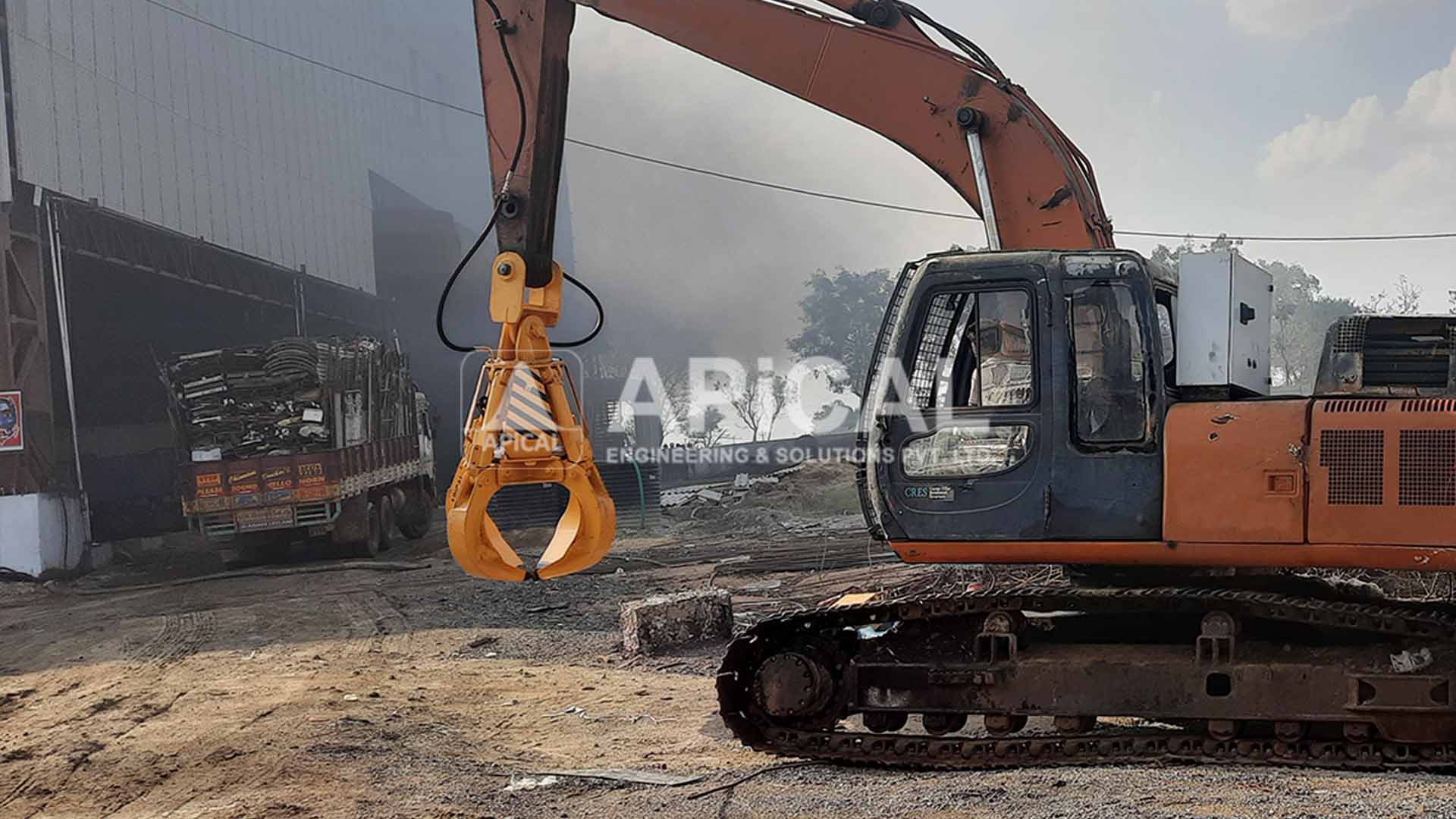
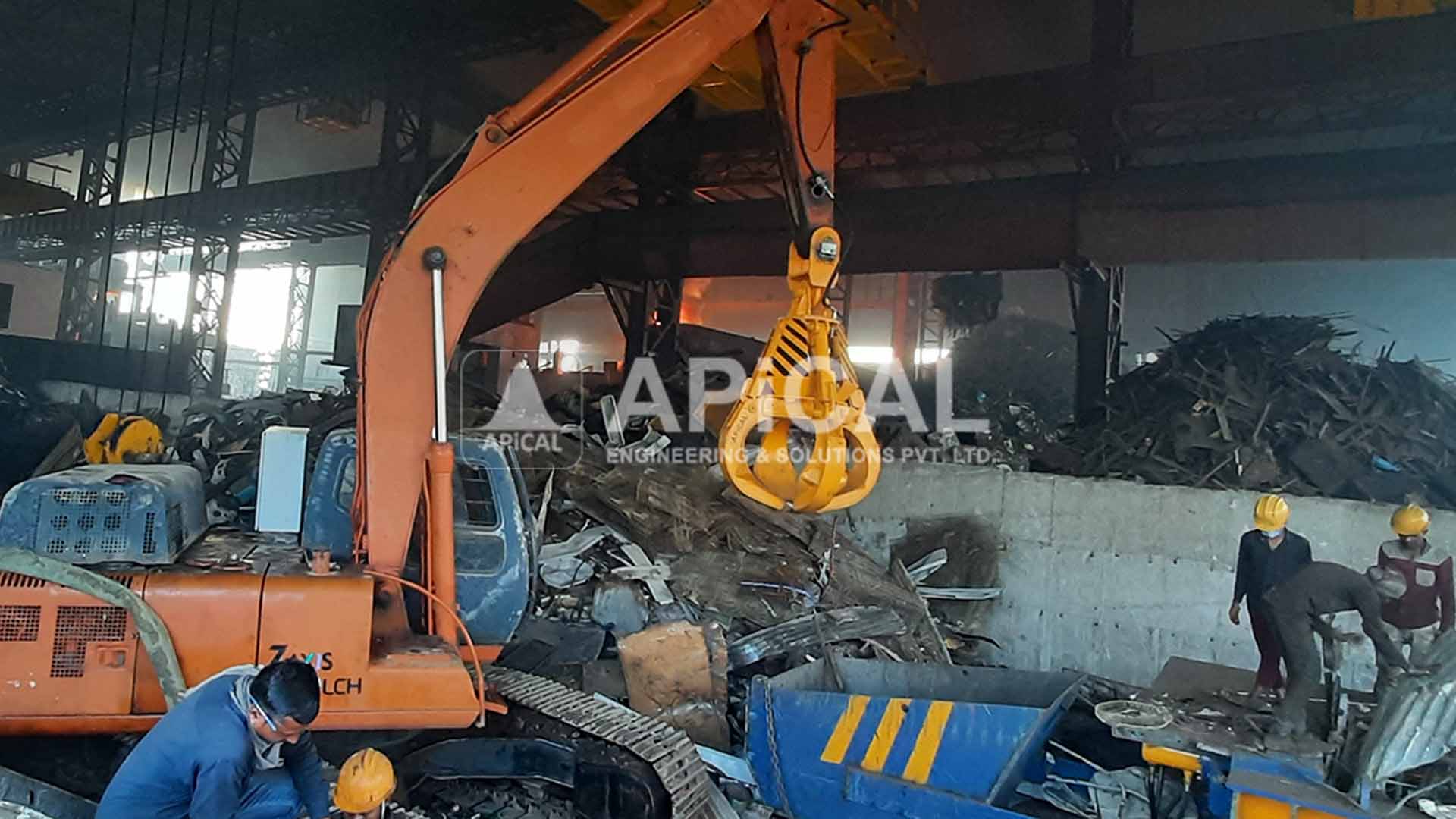
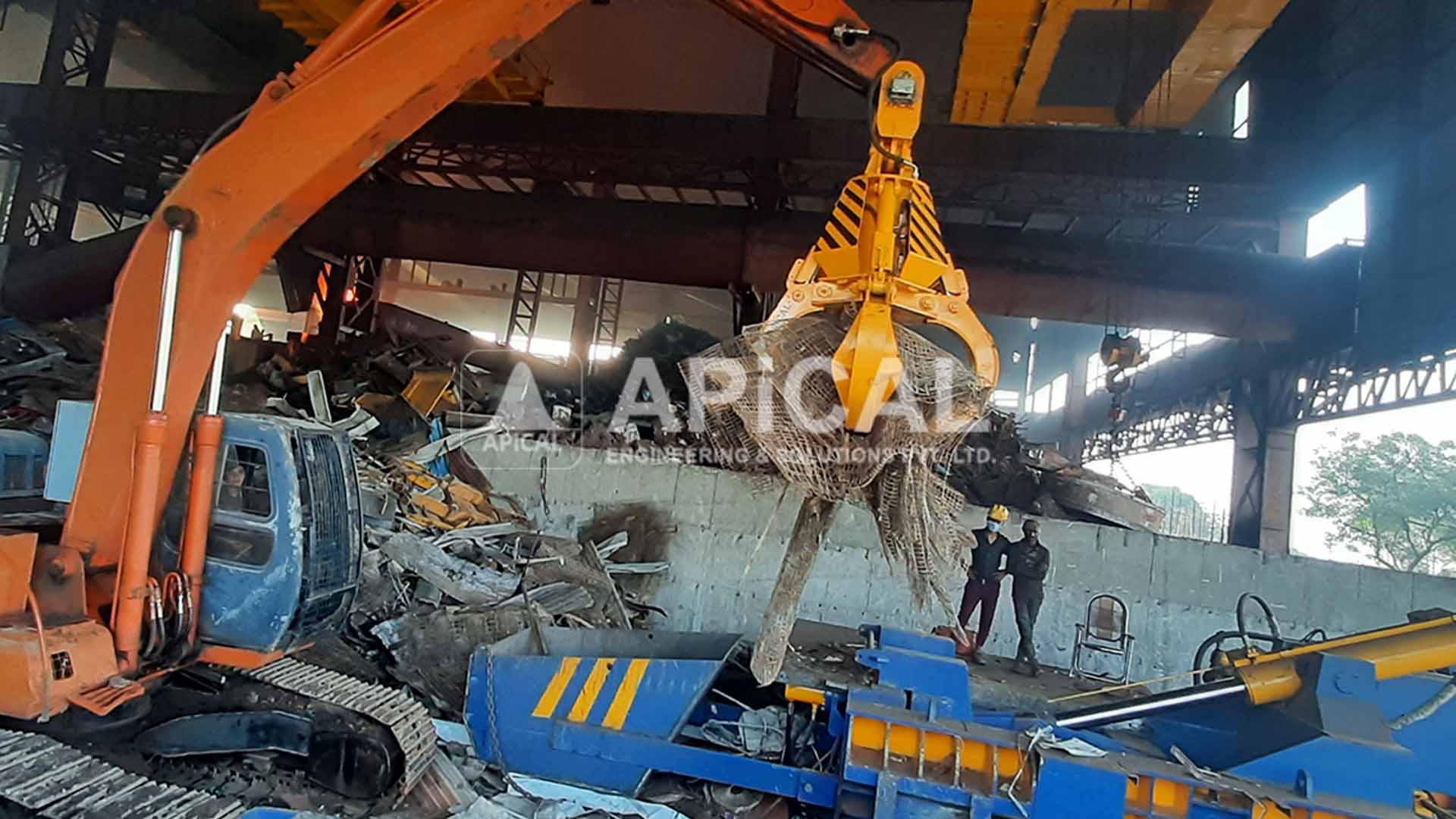
Apical’s Electrical Excavators with Grabbers combine the strength of hydraulic grabbing with the efficiency of electric drive systems. Designed for handling scrap, waste, and bulk materials, these excavators reduce operational costs compared to diesel variants while offering zero emissions for eco-friendly operations.
They feature robust grabber attachments, operating pressures up to 180 bar, and lifting capacities between 5 to 30 tons. Integrated with PLC-based control and ergonomic operator cabins, they ensure smooth, safe, and high-productivity cycles.
Why choose Apical Electrical Excavators
We provide sustainable, cost-effective solutions without compromising performance.

Eco-Friendly
Zero emissions with electric power.

Cost Efficient
Lower running cost vs. diesel models.

High Strength
Handles scrap, waste, and bulk loads.

Customizable
Grabber size and capacity tailored.
Planning & strategy
Our design ensures productivity, safety, and sustainability.
- Analyzing material type and duty cycle.
- Selecting grabber size and hydraulic capacity.
- Ensuring ergonomic operator comfort.
- Reducing maintenance with advanced electric drives.
Frequently asked questions
These excavators are designed for bulk handling applications such as scrap, municipal solid waste, and construction debris. Their electric drive ensures energy efficiency and eco-friendly operation compared to diesel alternatives.
Yes, due to their emission-free electric drive, these excavators can be safely operated indoors in recycling plants, warehouses, or material processing units without causing ventilation issues.
They are ideal for recycling facilities, waste-to-energy plants, steel plants, and scrap yards where large-scale material sorting and loading is required.
By eliminating diesel fuel consumption and reducing maintenance costs, electric excavators offer a significant reduction in operating expenses. They also provide consistent performance with less downtime, making them cost-efficient over the long run.