

High-Performance Grab Cranes for Solid Waste Management
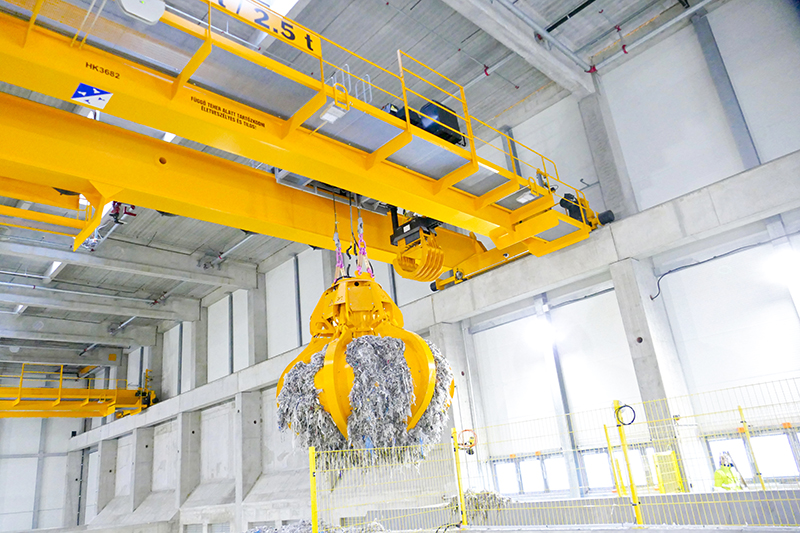
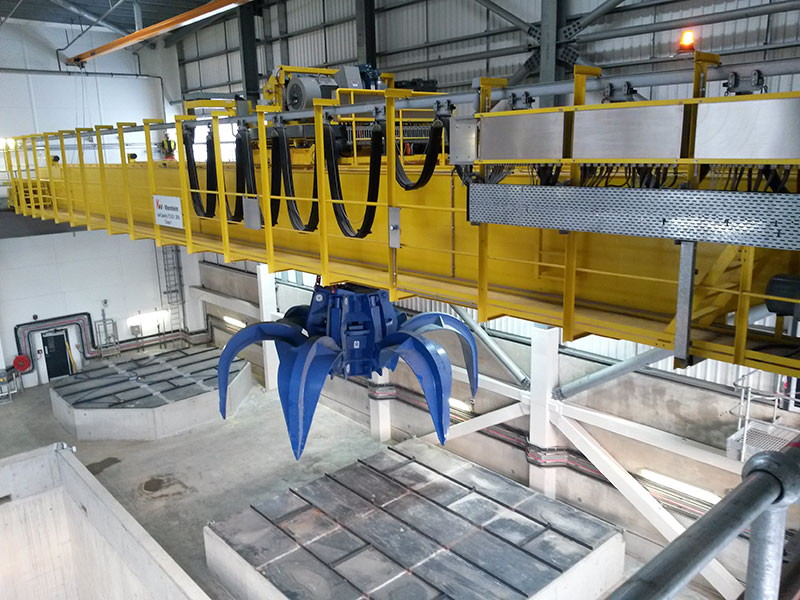
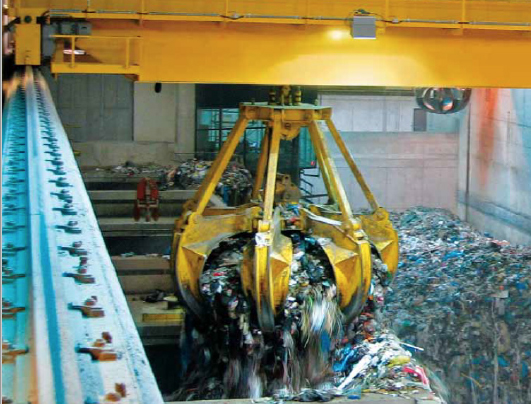
Apical’s Grab Cranes are specially designed for handling municipal solid waste (MSW) in waste-to-energy plants. Built with electro-hydraulic grabs, these cranes offer continuous operation for feeding waste into incinerators, sorting areas, or conveyors.
They are available with spans up to 40 meters and lifting capacities from 5 to 30 tons, ensuring high-volume waste handling with minimal downtime. Advanced automation options include semi-automatic or fully automated control systems for 24/7 operations.
Why choose Apical Waste Handling Cranes
We provide specialized solutions designed for waste plants’ continuous, demanding operations.

Continuous Duty
Built for 24/7 operation.

High Volume Handling
5–30 ton capacity.

Automation Ready
Semi and fully automated controls.

Durable
Corrosion-resistant construction for waste environments.
Planning & strategy
Our designs prioritize efficiency, automation, and reliability in waste operations.
- Analyzing plant waste volume and cycle time.
- Designing grab size and capacity.
- Adding automation for continuous feeding.
- Incorporating corrosion protection for durability.
Frequently asked questions
Grab Cranes are designed for bulk material handling such as coal, scrap, sand, clinker, and ores. Equipped with specialized grab attachments, they ensure fast and efficient loading and unloading operations in ports, warehouses, and steel plants.
Yes, Apical designs Grab Cranes with multiple configurations including single-rope, double-rope, and four-rope systems. They can be tailored for lifting capacity, span, duty cycle, and automation requirements based on the customer’s operational needs.
They are widely used in ports, steel plants, power plants, and bulk material storage yards where large quantities of loose materials need to be moved quickly and safely.
By enabling continuous, high-capacity bulk handling, Grab Cranes minimize loading time, reduce manual intervention, and enhance throughput. Their precision and automation features also lower operating costs and improve safety.